

Tracking agent action sequences requires capturing every state transition, decision input, and environmental feedback within a contained simulation. This process creates a verifiable record that allows developers to audit model behavior and identify failure points. Gold Trace Dataworks specializes in building these traceable records, ensuring that every data point retains its source lineage and execution context for rigorous analysis. For additional details, review the .
Defining Agent Trajectory Logging
Agent trajectory logging is the systematic recording of an agent's complete path through a state space, including all actions taken and observations received. This practice differs from simple output logging because it captures the causal chain of decisions rather than just the final result. By preserving the full sequence, developers can reconstruct the exact conditions that led to a specific outcome. For additional details, review the Customer Experience.
The Role of State Transitions
Each step in a trajectory represents a state transition where the agent selects an action based on its current policy. The environment then responds with a new state and a reward signal. Capturing both the action and the resulting state change is essential for understanding how the agent learns. Without this granular data, it is impossible to determine whether a failure resulted from a poor policy or an unexpected environmental shift. according to Software for Agent For additional details, review the Frequently Asked Questions.
Why Complete Sequences Matter
Partial logs often hide critical context, such as the specific inputs that triggered a decision. Complete sequences provide the necessary depth for debugging complex behaviors. This level of detail is particularly important in multi-agent systems where interactions between entities create emergent outcomes that are difficult to predict from isolated data points. For additional details, review the About.
Capturing Execution Evidence
To analyze agent behavior effectively, the logging system must capture witnessed execution data. This means recording not just what the agent did, but how it was executed within the simulation environment. Witnessed execution is the verification that a specific action was performed under defined conditions, providing a reliable basis for evaluation. This approach ensures that the data reflects actual runtime behavior rather than theoretical possibilities.
Runtime Outcomes and Uncertainty
Simulations often produce uncertain or unknown outcomes, especially when dealing with stochastic environments. A robust logging system must explicitly record these uncertainties rather than smoothing them into a success score. By preserving failed runs and unknown outcomes, developers gain a realistic view of the agent's capabilities. This transparency is crucial for building reliable evaluation benchmarks.
Manifest Integrity
Analyzing Action Patterns
Once trajectories are captured, the next step is to analyze the patterns within the action sequences. This involves identifying recurring behaviors, decision points, and performance trends. Action pattern analysis is the process of examining logged sequences to extract meaningful insights about agent performance and learning dynamics. This analysis helps developers understand how agents adapt to different scenarios and where they struggle.
Identifying Failure Modes
Comparing Policy Versions
Trajectory data also enables direct comparison between different versions of an agent's policy. By running the same simulation with different policies and comparing the resulting sequences, developers can measure the impact of specific changes. This comparative analysis is essential for iterative development, allowing teams to make data-driven decisions about policy updates.
Ensuring Data Lineage and Traceability
For agent data to be useful in training and evaluation, it must have clear lineage. Data lineage is the documentation of the origin, transformations, and usage of data throughout its lifecycle. In the context of agent simulations, this means tracking how raw simulation outputs are processed into curated datasets. This traceability ensures that every data point can be traced back to its source, providing a verifiable record of how the data was created.
Source-Backed Claims
When using agent data for training, it is important to ensure that the claims made about the data are source-backed. This means that any assertion about the agent's performance or behavior must be supported by the underlying trajectory data. By maintaining a clear link between the data and its source, developers can build trust in the evaluation results. This is particularly important when using the data for benchmarking or regulatory compliance.
Handling Inconvenient Evidence
A key principle of traceable data is that inconvenient evidence, such as failed runs or unknown outcomes, must remain in the record. Smoothing out these data points can lead to an overly optimistic view of the agent's capabilities. By preserving the full range of outcomes, including failures, developers can build more realistic and robust models. This approach aligns with the principles of rigorous scientific evaluation.
Implementing Logging Pipelines
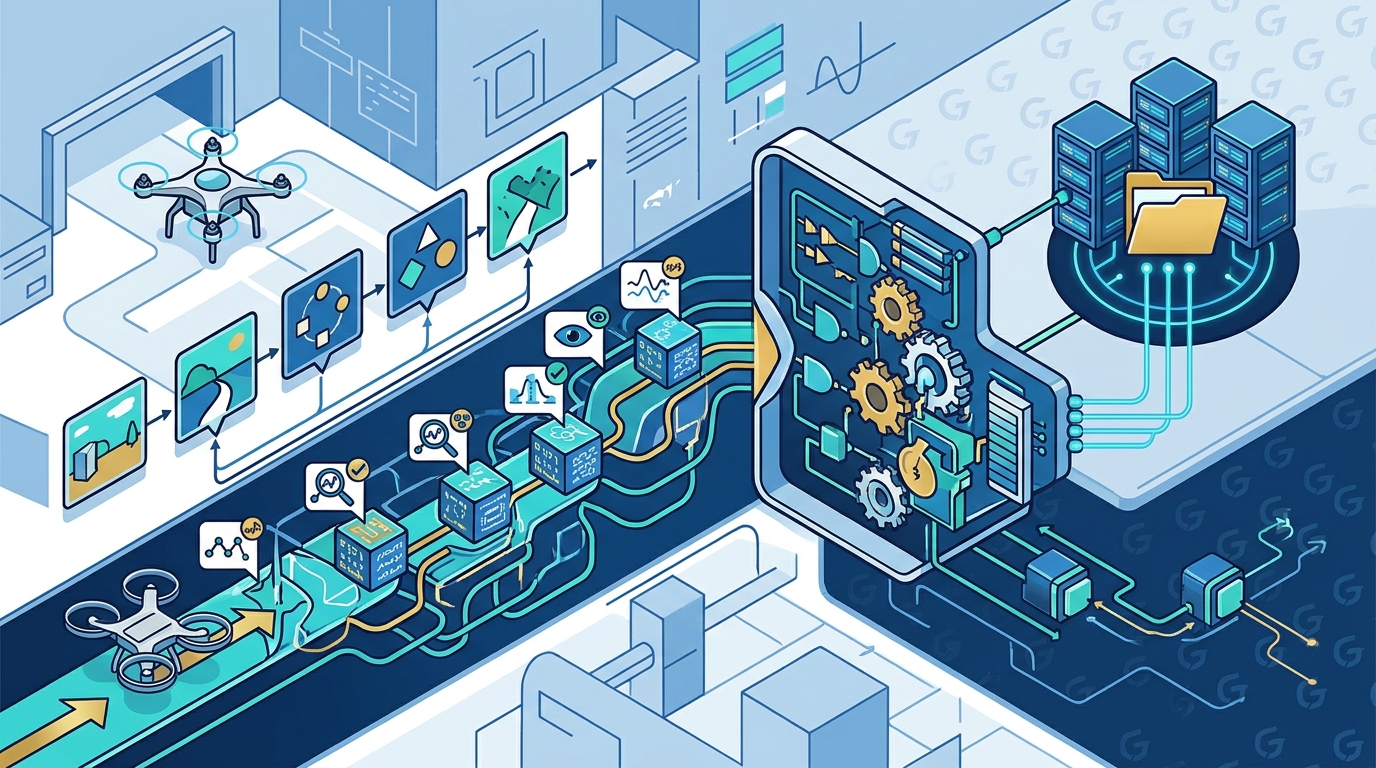
Building a logging pipeline for agent simulations requires careful design to ensure data quality and completeness. The pipeline should capture data at multiple stages, from raw environment outputs to processed trajectory records. This multi-stage approach allows for flexibility in analysis, enabling developers to work with different levels of detail depending on their needs.
Structural Validation
Before data is stored, it should pass through a structural validator to ensure it meets predefined schemas. This validation step catches errors early, preventing corrupted or incomplete data from entering the dataset. It also ensures that the data is consistent across different simulation runs, making it easier to compare and analyze. A well-designed validator can significantly improve the reliability of the logging pipeline.
Storage and Retrieval
Key Takeaways
- Agent trajectory logging captures the complete sequence of actions and observations, providing a verifiable record of agent behavior.
- Witnessed execution data ensures that logged actions reflect actual runtime behavior, including uncertainties and failures.
- Data lineage tracks the origin and transformations of data, ensuring traceability and verifiability.
- Action pattern analysis helps identify failure modes and compare policy versions, enabling data-driven development.
- Structural validation and efficient storage are essential for building reliable and scalable logging pipelines.
- Preserving inconvenient evidence, such as failed runs, is crucial for building realistic and robust models.
Frequently Asked Questions
What is the primary benefit of logging complete agent action sequences?
The primary benefit is the ability to audit and debug agent behavior by reconstructing the exact conditions that led to a specific outcome. This transparency helps developers identify failure points and improve policy robustness.
How does witnessed execution differ from standard output logging?
Witnessed execution captures the verification that an action was performed under defined conditions, including runtime outcomes and uncertainties. Standard output logging often only records the final result, missing the causal context.
Why is data lineage important for agent training data?
Data lineage ensures that every data point can be traced back to its source, providing a verifiable record of how the data was created. This traceability is essential for building trust in evaluation results and ensuring regulatory compliance.
What role does structural validation play in trajectory logging?
Structural validation ensures that logged data meets predefined schemas, catching errors early and preventing corrupted data from entering the dataset. This improves the reliability and consistency of the logging pipeline.
How can developers use trajectory data to compare policy versions?
Developers can run the same simulation with different policies and compare the resulting sequences to measure the impact of specific changes. This comparative analysis enables data-driven decisions about policy updates.
What is the significance of preserving failed runs in the record?
Preserving failed runs provides a realistic view of the agent's capabilities, preventing an overly optimistic view of performance. This transparency is crucial for building robust models that can handle real-world challenges.
Conclusion
Tracking and analyzing complete agent action sequences is essential for building reliable and transparent AI systems. By capturing witnessed execution data, ensuring data lineage, and implementing robust logging pipelines, developers can gain deep insights into agent behavior. Gold Trace Dataworks provides the tools and expertise to build these traceable records, supporting rigorous model training and evaluation. To explore how you can implement these practices in your own projects, visit the Gold Trace Dataworks website.