

How Agent Execution Traces Improve AI Model Reliability and Training Quality
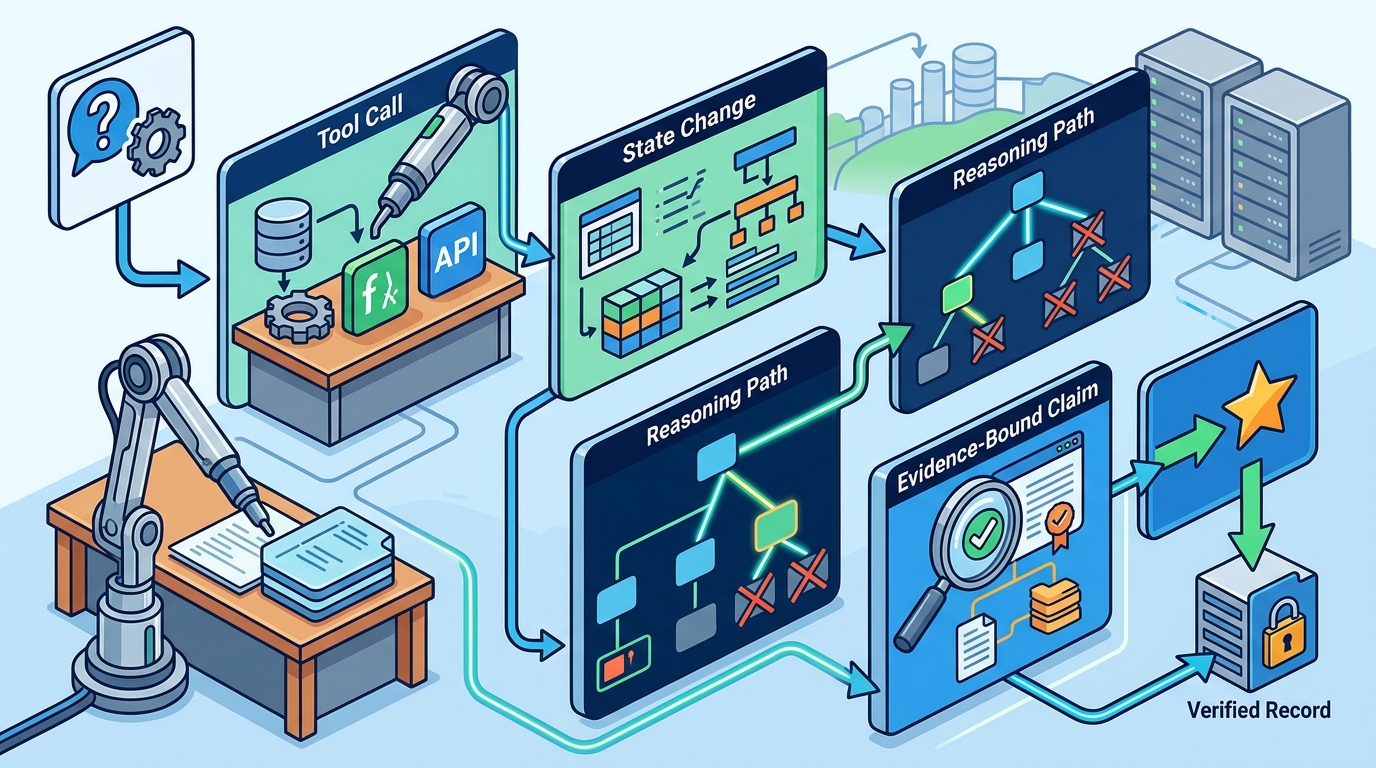
Agent execution traces improve AI model reliability by providing a verifiable record of every decision, tool call, and state change during a task. This transparency allows developers to identify failure modes, validate reasoning paths, and ensure that training data reflects actual operational outcomes rather than hallucinated successes. By preserving the full context of an agent's run, teams can build robust evaluation benchmarks that accurately measure performance under real-world constraints. For additional details, review the .
The Problem with Opaque Training Data
Traditional machine learning datasets often consist of static input-output pairs that lack context. This opacity creates a significant gap between theoretical performance and real-world reliability. When a model is trained on data that does not reflect the complexity of multi-step reasoning, it fails to generalize to dynamic environments. The result is a system that appears competent in isolated tests but breaks down when faced with ambiguous or evolving tasks. For additional details, review the Frequently Asked Questions.
Source Lineage and Data Provenance
Source lineage is the complete history of a data point, from its original origin to its final form in a dataset. In the context of agent traces, this means tracking every transformation, filter, and evaluation applied to the raw execution logs. Without this provenance, it is impossible to verify whether a training example is valid or if it was altered in a way that introduces bias. For additional details, review the About.
Gold Trace Dataworks emphasizes that every row in a curated dataset must keep its source, transformations, and rights status attached. This approach ensures that developers can trace any specific training example back to the exact agent run that generated it. If a model exhibits a specific failure pattern, engineers can inspect the original trace to determine if the issue stems from the model's logic or from a flaw in the data preparation pipeline.
Witnessed Execution and Runtime Outcomes
Witnessed execution refers to the verification that an agent's actions were actually performed in a controlled environment. Many synthetic datasets are generated without running the underlying code or tools, leading to a mismatch between the described actions and the actual results. Witnessed execution closes this gap by recording the runtime outcome of each step.