

Logging agent trajectories captures the complete sequence of actions, observations, and decisions an AI agent makes during a task. This detailed record provides the high-fidelity data required to train models that are reliable, transparent, and safe. Gold Trace Dataworks specializes in curating these datasets to ensure every data point is traceable and verifiable for rigorous model development. For additional details, review the Corey Jacobs QA Engineer.
1. Enhanced Model Interpretability
Full visibility into decision logic allows developers to understand why a model acts a certain way. Trajectory logs reveal the internal reasoning path of an agent, moving beyond simple input-output pairs. This transparency helps engineers identify logical gaps or biases in the model's behavior. By examining the step-by-step process, teams can debug complex failures that are invisible in standard black-box testing. For additional details, review the Frequently Asked Questions.
2. Improved Generalization Capabilities
3. Accurate Uncertainty Quantification
Explicit uncertainty markers allow models to know when they are guessing. Trajectory logging captures the confidence levels associated with each decision point. This data enables the training of models that can express doubt when facing ambiguous situations. Such capability is critical for safety-critical applications where overconfidence can lead to catastrophic errors. For additional details, review the About.
4. Rigorous Benchmarking and Evaluation
Standardized trajectory data enables consistent performance comparison across models. By using logged trajectories from contained simulations, developers can benchmark new models against established baselines. This approach removes variability from the testing environment, ensuring fair and reproducible results. It allows teams to measure specific capabilities, such as planning or tool use, with high precision.
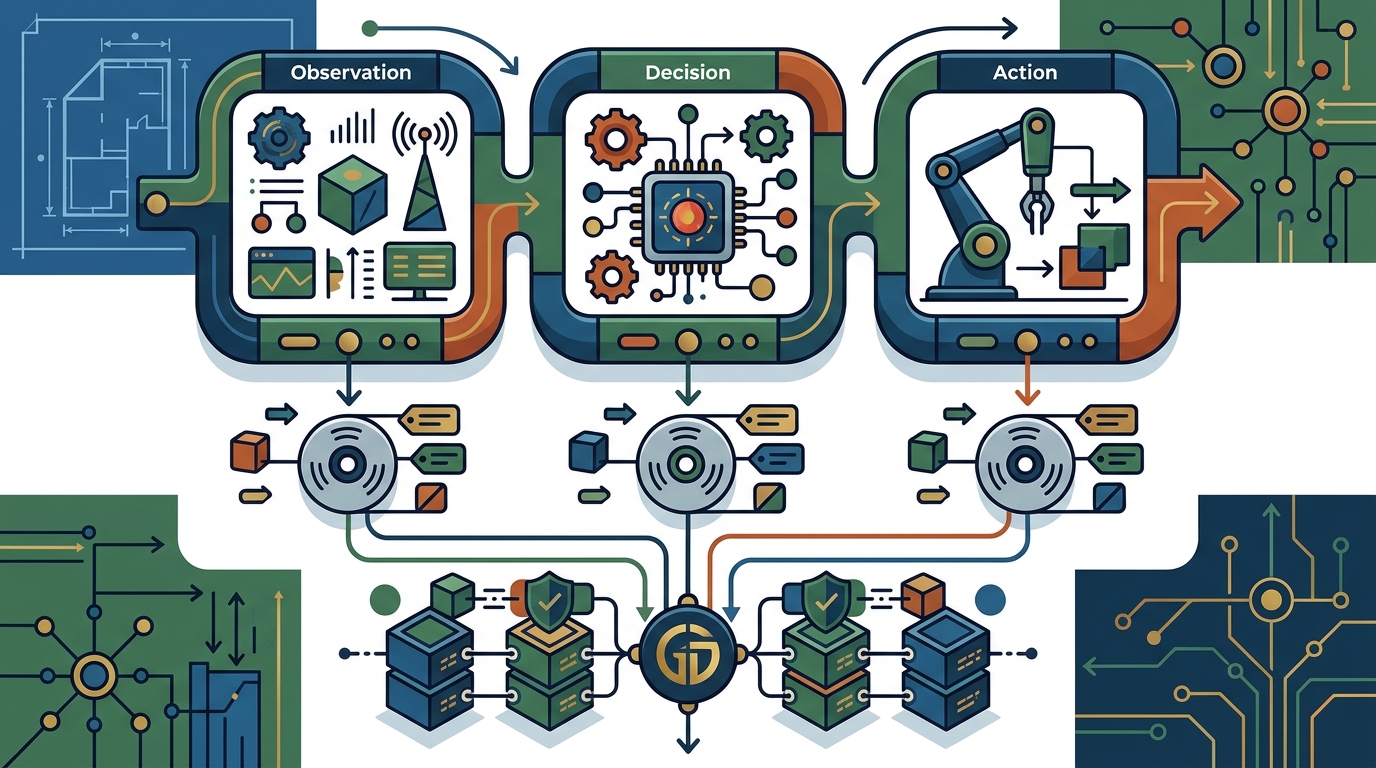
5. Source Lineage and Data Provenance
6. Efficient Fine-Tuning and Alignment
High-quality trajectory data accelerates the alignment of models with human values. Instead of relying on sparse feedback, developers can use dense trajectory logs to fine-tune models on specific behaviors. This method allows for precise adjustments to an agent's policy, ensuring it aligns with desired outcomes and safety constraints. The result is a faster and more effective alignment process.
7. Detection of Edge Cases and Failure Modes
Comprehensive logging reveals rare failure scenarios that standard testing misses. Trajectory logs capture the full context of rare events, including edge cases that cause model breakdowns. Analyzing these logs helps developers identify and patch vulnerabilities before deployment. This proactive approach significantly improves the robustness and reliability of the final AI system.
Choosing the Right Logging Strategy
Select a logging strategy that balances data granularity with storage efficiency based on your specific model architecture. For safety-critical applications, prioritize full trajectory capture with explicit uncertainty markers. For general-purpose models, focus on key decision points to maintain manageable dataset sizes.
Frequently Asked Questions
What is an agent trajectory?
An agent trajectory is a complete record of an AI agent's actions, observations, and state changes over time while performing a task.
Why is source lineage important in AI datasets?
Source lineage is important because it provides a verifiable history of data origin and transformations, ensuring integrity and auditability.
How does trajectory logging improve model safety?
Trajectory logging improves model safety by enabling the detection of failure modes and allowing developers to understand the reasoning behind risky decisions.
Can trajectory data be used for reinforcement learning?
Yes, trajectory data is essential for reinforcement learning as it provides the sequence of states and actions needed to optimize reward functions.
What is witnessed execution in the context of AI data?
Witnessed execution is a data validation method where the execution of an agent's actions is recorded and verified to ensure accuracy and reproducibility.