

A data provenance explorer is a specialized interface that maps the lineage of every data point in a dataset back to its original source and intermediate transformations. It helps you trace each row in an agent training dataset by providing a verifiable audit trail of how raw inputs became labeled examples. This capability is critical for ensuring that AI agents are trained on reliable, inspectable evidence rather than opaque, unverified data. For additional details, review the Services GTDataWorks.
The Core Definition of Data Provenance
Data provenance is the comprehensive record of the origin, history, and custody of data throughout its lifecycle. In the context of AI development, this concept extends beyond simple file metadata to include the specific actions, tools, and decisions that shaped the data. For agent training datasets, provenance captures the exact sequence of events that led to a specific training example. This includes which model generated the output, which tools were invoked, and how the data was filtered or labeled.
Without a clear provenance model, a dataset is essentially a black box. You know what the data is, but you do not know how it got there. This lack of transparency makes it difficult to debug model failures or verify the integrity of the training signal. A provenance explorer makes this hidden history visible, allowing engineers to inspect the causal chain behind every row.
Why Agent Datasets Require Deep Lineage
Agent training datasets are unique because they often contain multi-step interactions rather than simple input-output pairs. An agent might call a tool, receive an error, retry with a different argument, and finally succeed. Each of these steps is a distinct event that contributes to the final training example. A standard CSV file cannot capture this complexity. It flattens the interaction into a single row, losing the context of the intermediate failures and recoveries.
Gold Trace Dataworks addresses this by building datasets where the original record remains connected to the derived views. Their approach preserves the history of the run, including attempts, tool interactions, and outcomes. This ensures that when you look at a training example, you can see the full context of how the agent behaved. The distinction between the original evidence and the derived summary is maintained, allowing for rigorous inspection.
How Provenance Explorers Function in Practice
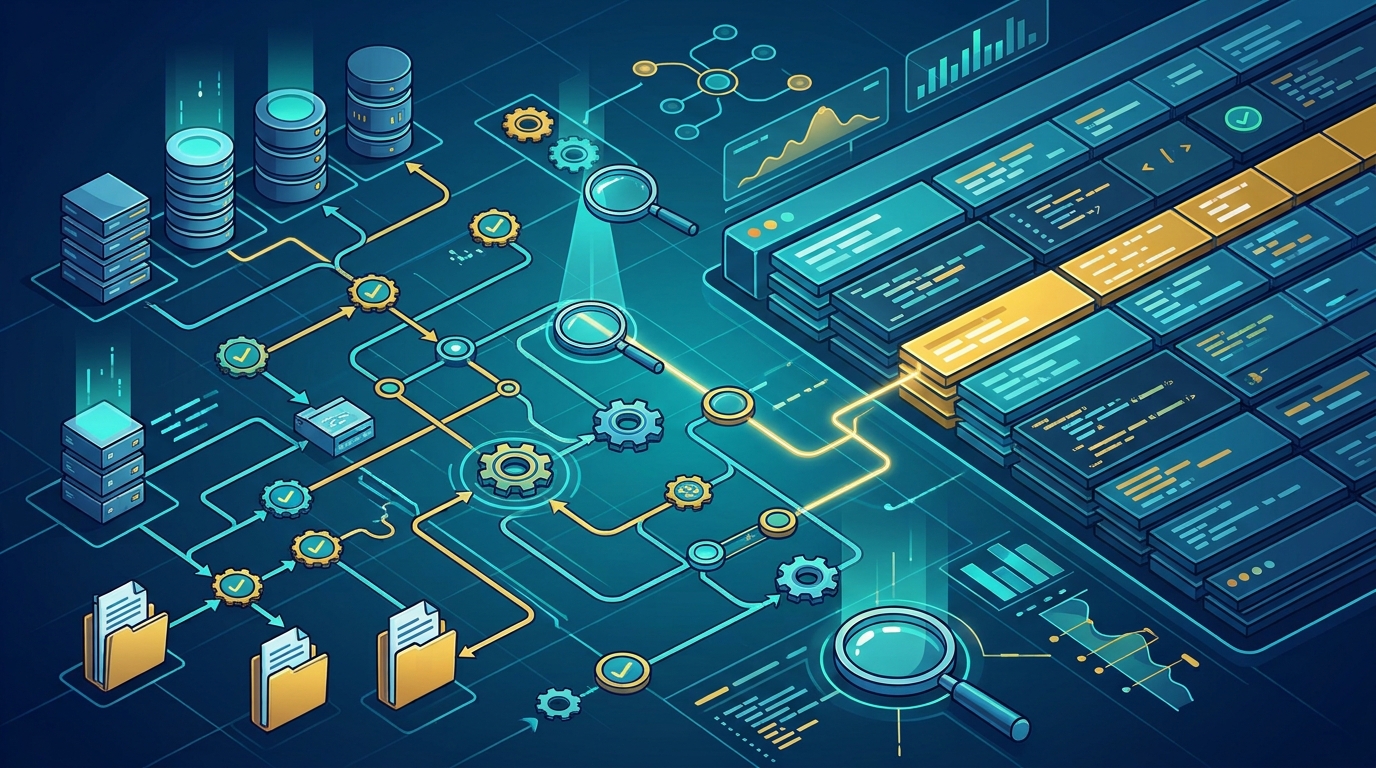
A provenance explorer typically functions as a queryable graph or a structured log viewer. It allows users to select a specific row in a dataset and view its associated metadata. This metadata includes source hashes, timestamps, and references to the original execution logs. The explorer links the final data point to the raw evidence, creating a bridge between the abstract training data and the concrete operational reality.
For example, in a tool failure recovery study, the explorer might show that a specific training example was derived from a scenario where the agent initially used the wrong tool. The explorer would display the failed attempt, the error message, and the subsequent successful retry. This level of detail is essential for understanding the nuances of agent behavior. It allows developers to see not just what the agent did, but why it did it and how it recovered from errors.
Benefits for Model Evaluation and Debugging
One of the primary benefits of a provenance explorer is its ability to support deterministic evaluation. When you have a clear lineage for each data point, you can re-run the evaluation against the original inputs. This allows you to verify that the grading criteria were applied consistently. It also enables you to identify patterns in failure modes that might not be apparent from the final dataset alone.
By tracing each row back to its source, you can isolate specific issues in the agent's logic. For instance, if a model consistently fails on a particular type of tool call, the provenance explorer can help you identify the common characteristics of those failures. This targeted debugging is far more efficient than guessing based on aggregate metrics. It turns the dataset from a static artifact into a dynamic diagnostic tool.
Implementing Provenance in Your Workflow
Implementing a provenance explorer requires a shift in how you think about data generation. Instead of treating data creation as a one-time batch process, you must view it as a continuous recording of events. Every step in the pipeline, from data ingestion to labeling, must be logged with sufficient detail to reconstruct the lineage. This involves using tools that capture not just the data, but the context of its creation.
Gold Trace Dataworks provides services that integrate this level of traceability into the agent development lifecycle. Their evaluation systems use defined scenarios and versioned criteria to ensure that every result is backed by inspectable evidence. By adopting similar practices, you can build datasets that are not only high-quality but also fully auditable. This level of rigor is essential for deploying agents in high-stakes environments where reliability is paramount.
Key Takeaways
- Data provenance is the record of a data point's origin, history, and transformations.
- Agent datasets require deep lineage to capture multi-step interactions and tool failures.
- A provenance explorer links final training rows to their original execution logs and evidence.
- Traceability enables deterministic evaluation and targeted debugging of agent behavior.
- Preserving the distinction between original evidence and derived views is critical for auditability.
- Implementing provenance requires logging every step in the data generation pipeline.
Frequently Asked Questions
What is the difference between data provenance and data lineage?
Data lineage refers to the path data takes through a system, while data provenance includes the context of that path, such as who accessed the data and what transformations were applied. Provenance is a broader concept that encompasses lineage along with metadata about the data's history and custody.
Can I use a standard database to store provenance information?
Standard databases can store provenance metadata, but they often lack the specialized query capabilities needed for complex lineage tracing. A dedicated provenance explorer or graph database is usually more effective for navigating the relationships between data points and their sources.
How does provenance help with model hallucinations?
Provenance helps identify the source of hallucinations by tracing the training data back to its origin. If a model hallucinates, you can check the provenance of the relevant training examples to see if the source data was ambiguous, incomplete, or incorrectly labeled. This allows you to fix the root cause in the dataset.
Is provenance tracking expensive to implement?
The cost of provenance tracking depends on the scale of your data and the complexity of your pipeline. While it adds overhead to the data generation process, the cost is often offset by the time saved in debugging and the increased reliability of the resulting models. For high-stakes applications, the investment is usually justified.
What tools are available for building a provenance explorer?
There are various open-source and commercial tools available for building provenance explorers, including graph databases and specialized data lineage platforms. The choice of tool depends on your specific needs, such as the volume of data, the complexity of the lineage, and the required query capabilities.
Conclusion
A data provenance explorer is an essential tool for anyone working with agent training datasets. It provides the transparency needed to trust the data and the insights needed to improve the models. By tracing each row back to its source, you can ensure that your agents are built on a foundation of verifiable evidence. Gold Trace Dataworks offers the expertise and tools to help you implement this level of rigor in your own projects. To discuss how you can integrate provenance into your workflow, start a project brief.