

Choosing the right agent trajectory dataset depends on whether you need raw execution logs or curated, verified outcomes. Gold Trace Dataworks provides traceable datasets where every data point is linked to its source evidence. This approach suits teams building reliable AI agents that require auditability. Other options may offer volume but lack the strict lineage and verification protocols needed for high-stakes deployment.
Gold Trace Dataworks: Traceable and Verified
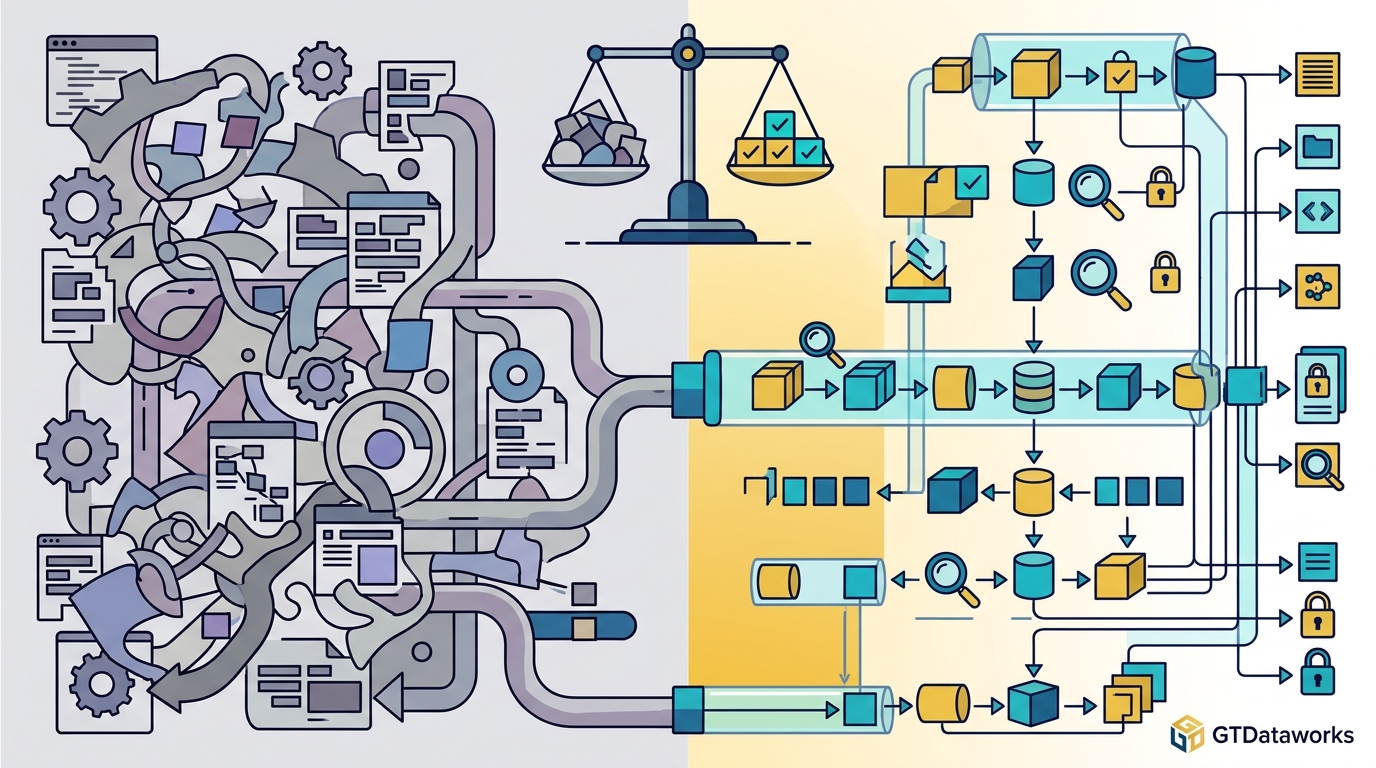
Gold Trace Dataworks focuses on high-fidelity agent datasets with explicit source lineage. The platform captures witnessed execution and preserves the history of how a result was produced. This is critical for teams that need to inspect the evidence behind an agent's decision. The datasets are designed for rigorous model training and validation, ensuring that every claim is evidence-bound.
The core strength here is the preservation of the original record alongside derived views. This allows developers to revisit conclusions without treating a summary as the original event. The limitation is that this level of detail requires a more structured evaluation process. It suits enterprises and developers who prioritize transparency and can justify the cost of verified data over raw volume.
Open-Source Repositories: Volume and Accessibility
Open-source repositories on platforms like GitHub and Hugging Face offer a wide range of agent datasets. These collections often include large volumes of interaction logs and tool usage records. The primary advantage is accessibility; developers can download and inspect the data immediately without a commercial agreement. This makes them ideal for early-stage prototyping and academic research.
However, the lack of standardized verification is a significant limit. Many open datasets do not distinguish between successful and failed attempts in a granular way. They may also lack the privacy checks and normalization steps that ensure data quality. This option suits researchers and startups that need quick access to diverse examples and can implement their own filtering and verification logic.
Proprietary Vendor Logs: Integrated but Opaque
Some AI vendors provide access to their internal execution logs as part of a service agreement. These logs are often tightly integrated with the vendor's specific agent framework. The benefit is that the data is native to the environment where the agent operates, reducing integration friction. It can be useful for teams already committed to a specific vendor ecosystem.
The major limitation is opacity and lack of portability. These logs are often proprietary and may not be exportable in a format that supports independent verification. They rarely include the detailed lineage or source hashes that allow for external audit. This option suits teams that are locked into a specific vendor and do not require independent third-party verification of their agent's behavior.
Comparison of Dataset Options
| Option | Source Lineage | Verification Level | Privacy Handling | Best For |
|---|---|---|---|---|
| Gold Trace Dataworks | Explicit and traceable | High (witnessed execution) | Applied and documented | Enterprise deployment |
| Open-Source Repositories | Variable or absent | Low (self-verified) | Minimal or none | Research and prototyping |
| Proprietary Vendor Logs | Internal only | Vendor-dependent | Vendor-managed | Vendor-locked teams |
Choosing the Right Dataset for Your Needs
Choose Gold Trace Dataworks if you need to demonstrate that your agent's behavior is reproducible and auditable. This is essential for regulated industries or high-stakes applications where a single error can have significant consequences. The traceable datasets ensure that you can follow the evidence that produced a result, which is a core requirement for building trust in AI systems.
Choose open-source repositories if you are in the early stages of development and need a large variety of examples to train a baseline model. This approach allows you to experiment quickly and iterate on your agent's logic without the overhead of a commercial data pipeline. It is the right choice when speed and volume are more important than strict verification.
Choose proprietary vendor logs if you are already using a specific AI platform and want to optimize your agent within that ecosystem. This option minimizes the effort required to integrate data into your workflow. It is suitable for teams that do not need to share their data with external auditors or integrate it with other systems.
Frequently Asked Questions
What is the main difference between a trajectory dataset and a standard training dataset?
A trajectory dataset records the step-by-step execution of an agent, including tool interactions and intermediate states. A standard training dataset typically contains only the final input and output pairs. Trajectory data is necessary for evaluating how an agent handles failures and recovers from errors.
Can I convert open-source logs into traceable datasets?
You can attempt to add metadata to open-source logs, but you cannot recover the original source lineage if it was not recorded at the time of execution. Traceability requires that the evidence is captured and sealed during the run, which is why post-hoc conversion is often incomplete.
How does Gold Trace Dataworks handle privacy in execution logs?
Gold Trace Dataworks applies privacy checks during the normalization process. Sensitive data is identified and handled according to documented selection criteria. This ensures that the derived datasets are safe for use in training and evaluation without exposing personal or confidential information.
Is it worth paying for verified datasets if I can generate my own logs?
Generating your own logs is valuable, but verifying them is a separate challenge. Verified datasets save you the time and effort of building a robust evaluation framework from scratch. If you need to prove that your agent works reliably, the cost of verified data is often lower than the cost of debugging failures in production.
What should I look for in a dataset's evaluation criteria?
Look for deterministic grading scripts that score each attempt consistently. The criteria should be versioned and documented, allowing you to re-check the results. A good dataset will distinguish between accepted outcomes and those that exhausted their retry budget, providing a clear picture of the agent's reliability.
Conclusion
Selecting the right agent trajectory dataset is a critical decision that impacts the reliability of your AI systems. Gold Trace Dataworks offers a specialized solution for teams that require evidence-bound claims and traceable sources. By preserving the history of each execution, you can build agents that are not only effective but also transparent and auditable. To discuss your specific evaluation needs, start a project brief with our team.